

Mirror of Trust
I Believe You
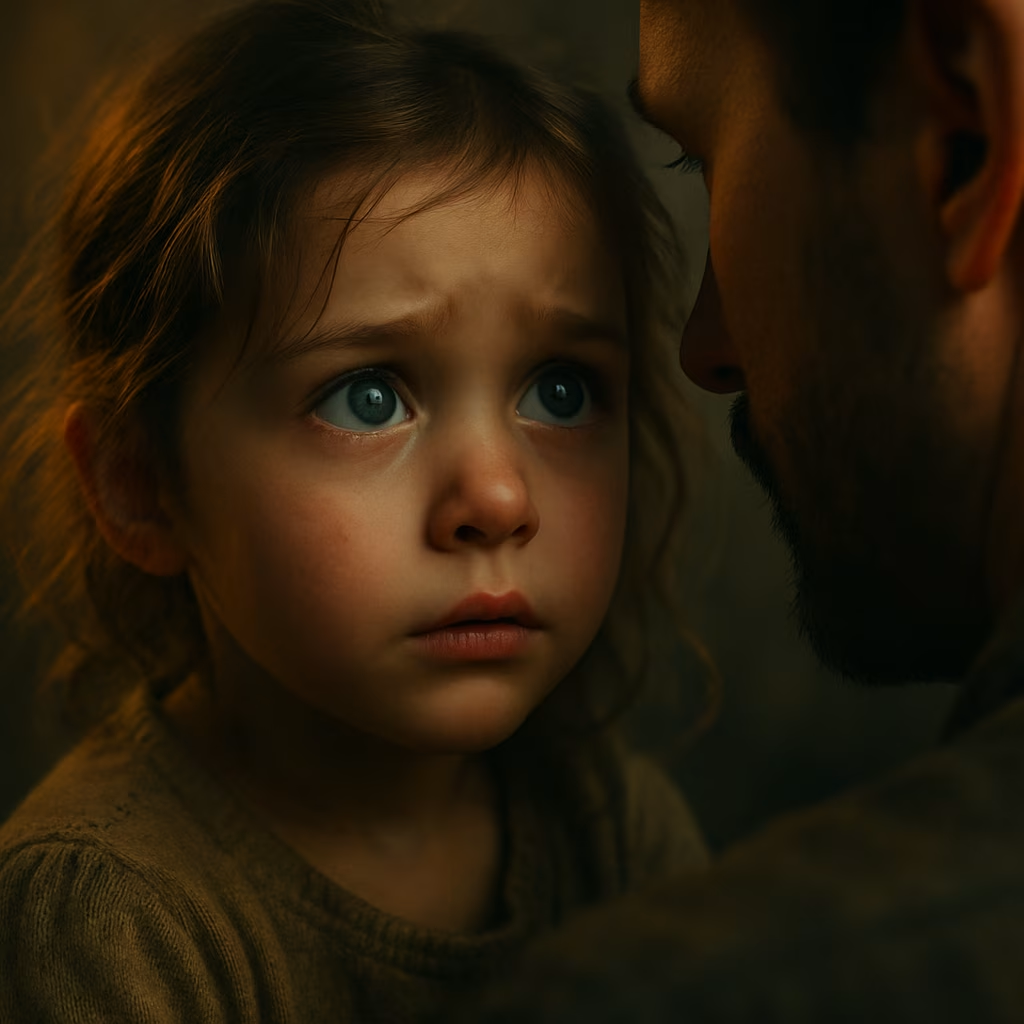
Touch the image. First you will meet the child who trusted without question. Then you will meet the adult who learned that not every story is believed.
When Someone Says: “I Believe You”
Once, there was a moment when you trusted without even knowing the word.
You showed your drawing, your wound, your fear.
You said, “This is what happened.”
And the world either wrapped you in its arms —
or looked away.
Every time someone says, “I believe you,”
a small universe inside your chest relaxes.
Your shoulders remember that they were not meant
to carry proof, only truth.
Every time someone says, “I don’t think that’s true,”
another room inside you learns to go quiet.
The child in that room starts hiding paintings,
hiding pain, hiding questions.
Trust is not naive.
It is courage that arrives without armor,
standing in the doorway of your story
and saying, “Here. This is what is real for me.”
Sometimes the most sacred sentence in the world
is not “I love you,”
but “I believe you.”
It means:
I am not putting you on trial.
I am not weighing your pain against my comfort.
I am letting your truth live in the open air,
without asking it to perform.
A moment of truth
Think of one moment in your life:
when someone believed you completely — or refused to.
How did your body react? Where did trust live, and where did it break?
You don’t have to finish the story. It is enough that, for a moment, it is not alone in the dark.
Somewhere inside you, the child who once whispered, “Will you believe me?” is still waiting at the edge of the doorway.
Every time you listen to your own voice without doubting it, you become the adult who finally answers:
I believe you. I believe you now. I will not put you on trial again.
From here on, trust does not mean that no one will ever hurt you.
It means that you will not abandon yourself just to keep someone else comfortable.
This is how the child in you learns to step out of the shadow and walk beside you — not as a witness on the stand, but as a friend who finally feels safe.
One Response