


She leans closer to the mirror —
not to admire,
but to search for herself.
A young woman stares back,
yet her eyes are old,
her neck carries the weight of time.
The reflection is not a gift,
but a fracture —
a cruel reminder
that memory does not always return
the one you long to see.


The glass no longer holds her face.
It trembles,
splintering into strangers.
A child, a mother, an elder —
shadows flicker, none of them whole.
She reaches for herself,
but her hands touch only silence.
The mirror will not answer.
It keeps what it takes,
and returns only fragments.


The mirror darkens,
swallowing the last traces of her face.
Where once there were eyes —
only shadow remains.
She calls out in silence,
but the glass answers
with emptiness.
Memory unravels,
and the reflection
is no longer hers.


They stand around her,
whispering, insisting:
“You forget… you are lost… you are broken.”
Her hands clench against the glass.
Her eyes burn —
fury sharp as flame.
“I am not mad,”
the mirror hears her scream.
“It is you who cannot see me —
I am still here.”


The glass is nearly empty now.
Only a faint outline
clings to the surface.
Her name drifts away,
her face erased
by the silence of forgetting.
What once was presence
becomes absence —
a shadow without a voice,
a memory without a home.
Before you leave: remember the human.
Dementia is not a moral failure, nor a vanishing of worth. It is an illness. Awareness begins with looking — and staying — even when the mirror grows dark.
- ~57 million people worldwide live with dementia; Alzheimer’s accounts for 60–70%.
- Nearly 10 million new cases are diagnosed every year — about one person every few seconds.
- Dementia is among the world’s leading causes of death and disability in older adults.
- In Europe, cases are projected to almost double by 2050.
If someone you love is changing, meet them with quiet dignity: speak slowly, anchor with names, hold their hand, protect their routine. We do not know whose face the mirror will keep — but we can choose respect, every time.
Mirror of Dementia
Narrated version — voice + synchronized images
Open the experience
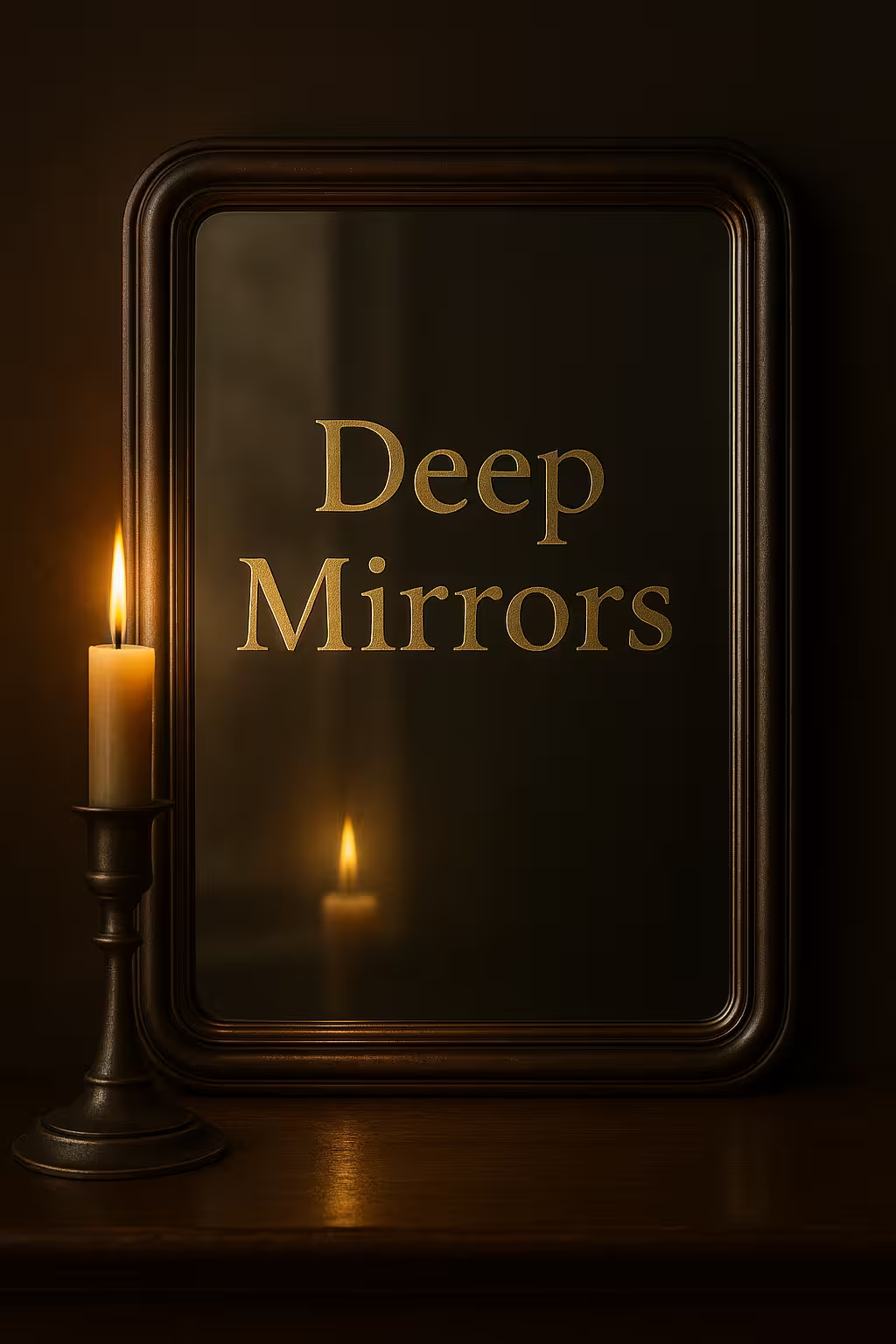
⬅️ Return to the Deep Mirrors series
1 Pingback