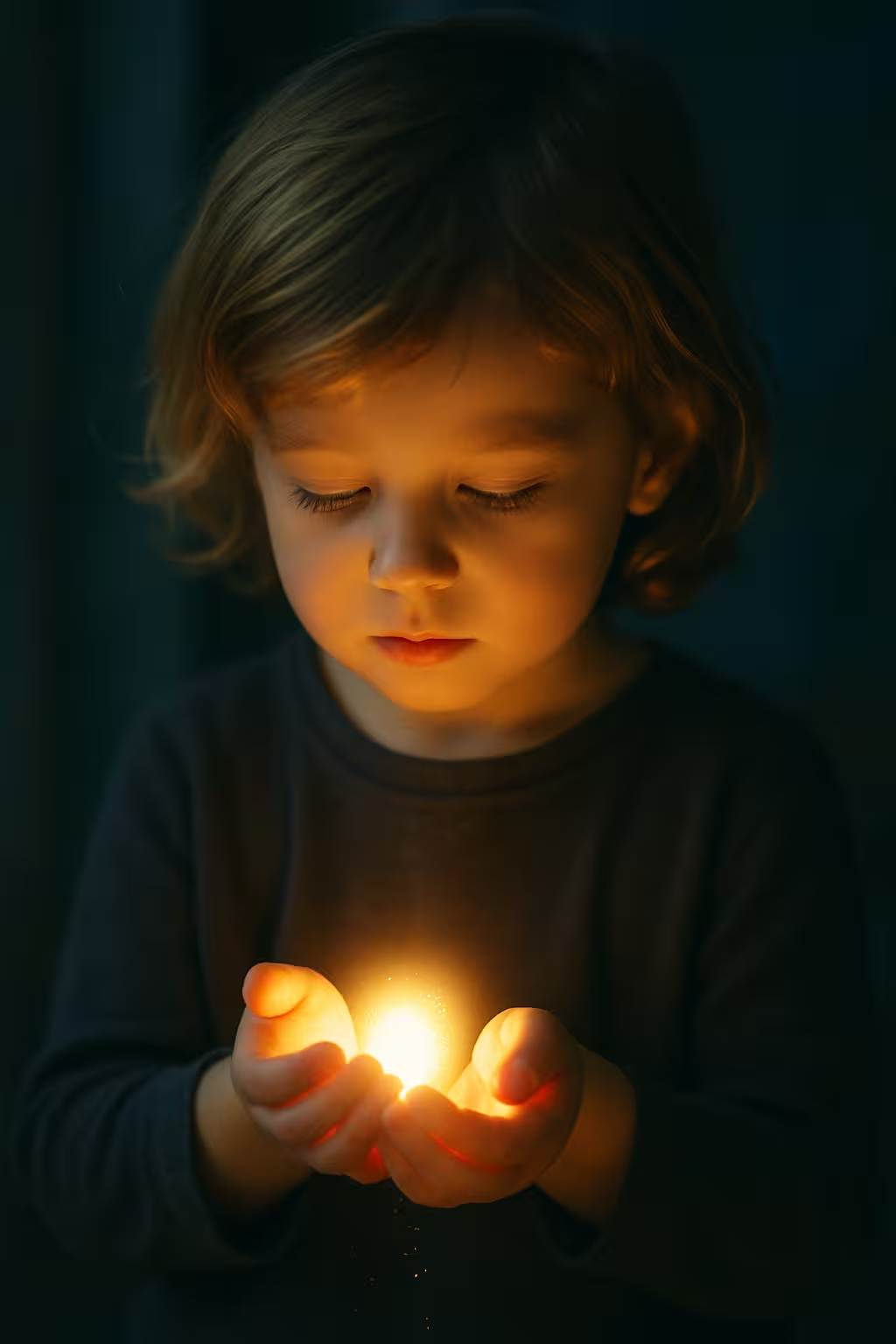
A child gently holding a glowing light in cupped hands An adult holding softly glowing embers with ash falling between the fingers

Mirror of Innocence

Through the Eyes of a Child

Before the Mirrors

Before you stand ten mirrors — not of glass, but of memory, breath, and light. Each one holds the eyes of a child who once lived in you, who still does, quietly. Do not look away when you meet that gaze. It has seen more than you ever dared to name. It remembers the moment before words, before shame, before the world began dividing love from fear. This is not a book of sorrow. It is a map of tenderness — a path back to the place where every soul begins: small, trusting, radiant. And if tears come, let them fall without apology. They are not weakness. They are how the child inside you speaks. Do not turn away from that voice. Do not hush it again. Because when a child is silenced — anywhere in the world, in any language, in any body — the silence spreads through generations. But when one heart listens, truly listens, the silence breaks. So read gently. These mirrors are not for judgment. They are for remembrance — and for the promise that no child, not even the one within you, will ever be forgotten again.

The Ten Mirrors

Open

1. Mirror of Birth — “Light” The first breath. Eyes that see everything for the first time.

The first breath, the first gaze that believed it deserved to be here.

Theme: Trust, safety, and the sense of being enough.
Goal: To show that our inner child accompanies us through all stages of life.
Open

2. Mirror of Trust — “I Believe You” The child asks whether the world tells the truth.

The heartbeat that asks, “Can I trust you with what I feel?”

Theme: How trust is born — in people, in oneself, in life.
Goal: To show that trust is not naivety, but the courage of the heart.
Open

3. Mirror of Shame — “When They Said It Was My Fault” The child learns to stay silent not to hurt adults.

The moment when someone else’s guilt quietly moved into a child’s heart.

Theme: Guilt and shame that never belonged to the child.
Goal: To separate emotions that were taken on unfairly.
Open

4. Mirror of Boundaries — “My Little World” The child sets its first boundaries — not in anger, but in love.

The sacred space where a child learns that “no” can also mean “I love myself”.

Theme: The right to say no, to have one’s own rhythm, to have silence.
Goal: To show that boundaries are a form of love for oneself.
Open

5. Mirror of Loss — “Where Did You Go?” The child searches for what has disappeared.

The empty chair, the closed door, and the love that refuses to vanish.

Theme: Departure, death, loss, separation.
Goal: To teach that love never disappears — it only changes form.
Open

6. Mirror of Curiosity — “The First Question” Why does the sky sometimes cry?

The question that refuses to be silenced, even when adults grow tired.

Theme: Curiosity as the energy of life, not a sin.
Goal: To reclaim the right to ask questions without fear.
Open

7. Mirror of Forgiveness — “I Still Remember” The child looks at the past without anger.

The moment when the heart loosens its fist and opens its hand.

Theme: Forgiveness as freedom, not forgetting.
Goal: To show that forgiveness is a gift to oneself, not to the guilty.
Open

8. Mirror of the Body — “My Hands, My Heart” The child discovers that the body also speaks.

The discovery that every heartbeat, scar and shiver is a language of its own.

Theme: Acceptance of self, body, and emotions.
Goal: To show that the body is the temple of innocence, not a source of shame.
Open

9. Mirror of Silence — “When the Noise Stops” The child listens to the silence and discovers divinity within it.

The quiet room where the world finally becomes soft enough to hear the soul.

Theme: Contemplation, solitude, inner listening.
Goal: To teach peace through the child’s way of seeing the world.
Open

10. Mirror of Return — “The Circle Closes” The child returns to the source and recognizes itself in everything.

The last look back that feels less like an ending, and more like a homecoming.

Theme: Death, transformation, and the wholeness of life.
Goal: To show that the end is only the beginning in another language of light.
If this mirror spoke for you, let it travel.